Divarication of Recti (AWR – Abdominal Wall Repair)
- Home
- Divarication of Recti (AWR – Abdominal Wall Repair)
WHAT IS DIVARICATION OF RECTI (AWR – ABDOMINAL WALL REPAIR)?
Divarication of Recti, also known as Diastasis Recti, is a condition in which the rectus abdominis muscles (the “six-pack” muscles) separate along the midline of the abdomen. These muscles are normally connected by a band of connective tissue called the linea alba, which helps maintain the strength and stability of the abdominal wall.
When this connective tissue stretches or weakens, the two abdominal muscles move apart, creating a visible bulge or gap in the middle of the abdomen. This condition does not involve a hole in the muscle like a hernia, but it can still weaken the abdominal wall and affect core stability.
Divarication of recti is commonly seen in women after pregnancy, but it can also occur in men and individuals with obesity or long-term abdominal strain. In cases where symptoms are significant or the abdominal wall becomes weak, Abdominal Wall Repair (AWR) surgery may be recommended to restore the strength and function of the abdominal muscles.
WHY DIVARICATION OF RECTI OCCURS
Divarication of recti occurs when the connective tissue between the abdominal muscles becomes stretched or weakened. Several factors can contribute to this condition.
Some common causes include:
1. Pregnancy
During pregnancy, the growing uterus stretches the abdominal muscles and connective tissues. This stretching can cause the rectus muscles to separate.
2. Increased Abdominal Pressure
Conditions that increase pressure inside the abdomen, such as heavy lifting, chronic coughing, or obesity, can weaken the abdominal wall over time.
3. Multiple Pregnancies
Women who have had multiple pregnancies may be more likely to develop separation of the abdominal muscles.
4. Aging and Muscle Weakness
As the body ages, connective tissues may lose elasticity and strength, making the abdominal wall more vulnerable to separation.
5. Rapid Weight Gain or Loss
Significant changes in body weight can stretch the abdominal tissues and contribute to muscle separation.
TYPES OF DIVARICATION OF RECTI
Divarication of recti can vary in severity depending on the amount of separation between the abdominal muscles.
1. Mild Divarication
A small gap between the abdominal muscles that may not cause significant symptoms and may improve with physiotherapy and core strengthening exercises.
2. Moderate Divarication
A wider separation that may lead to abdominal weakness, a visible bulge, or discomfort during physical activity.
3. Severe Divarication
A large separation where the abdominal wall becomes weak and unstable. In such cases, surgical repair may be recommended to restore abdominal strength.
SYMPTOMS OF DIVARICATION OF RECTI
The symptoms of divarication of recti can vary depending on the degree of muscle separation. Common symptoms may include:
- A visible bulge or ridge in the middle of the abdomen, especially when sitting up or straining.
- Weakness in the abdominal muscles.
- Poor posture or difficulty maintaining core stability.
- Lower back pain due to reduced abdominal support.
- A feeling of abdominal looseness or lack of muscle control.
- Difficulty performing certain physical activities or exercises.
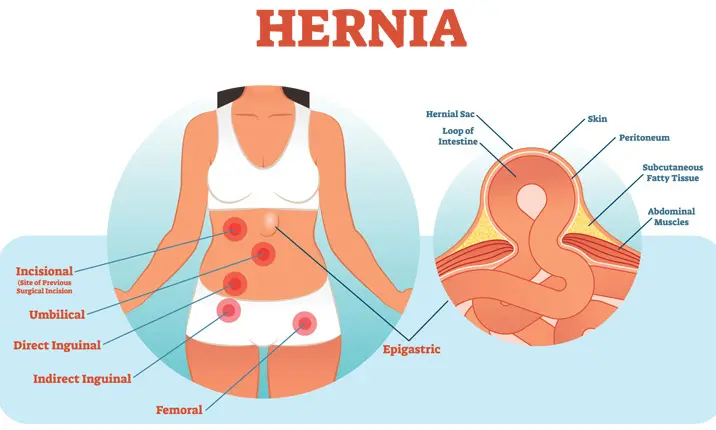
- In some cases, associated umbilical or ventral hernia may also develop.
TREATMENT OF DIVARICATION OF RECTI
The treatment for divarication of recti depends on the severity of the condition and the symptoms experienced by the patient.
- Physiotherapy and Core Strengthening
In mild cases, targeted abdominal exercises and physiotherapy may help strengthen the core muscles and improve muscle function. - Lifestyle Modifications
Maintaining a healthy weight, avoiding excessive abdominal strain, and practicing proper lifting techniques can help reduce symptoms. - Abdominal Wall Repair (AWR)
When the separation is severe or causes functional problems, surgical treatment may be recommended. During abdominal wall repair, the surgeon brings the separated muscles back together and reinforces the abdominal wall. - Mesh Reinforcement
In some cases, a surgical mesh may be used to strengthen the abdominal wall and reduce the risk of recurrence.
The procedure can often be performed using laparoscopic or minimally invasive techniques, resulting in faster recovery and smaller scars.